Hackmanite is not your average gemstone. This rare gem from the sodalite group can actually change color when exposed to ultraviolet light, making it one of the most fascinating natural minerals in the world. Known for its luminescence and tenebrescent reaction, hackmanite shows a visible shift after exposure to sunlight or UV radiation. Mineral collectors and lovers of rare gems are drawn to its photochromic properties, glowing personality, and unforgettable ability to transform right before your eyes. In today’s guide, let’s talk about everything Hackmanite.
Hackmanite meaning
Inner truth and awareness: Hackmanite is often connected with truth and personal clarity. Its color change under different lighting, for instance, reflects the idea of hidden layers coming to the surface. When you work with this stone, it may support a deeper understanding of your own thoughts and emotions, helping you recognize patterns that have been buried. This awareness can create a clearer sense of direction.
Emotional balance during change: Hackmanite is also linked to emotional balance, especially during those periods of transition. Life shifts can feel overwhelming, of course, yet this stone is believed to bring a calming influence that softens intense reactions. It may help you process feelings at a manageable pace while keeping your focus grounded in the present. Over time, this balanced approach can lead to more thoughtful responses rather than impulsive decisions.
Spiritual growth and intuition: Another common metaphysical meaning of Hackmanite centers on spiritual growth and intuitive awareness. Its unique reaction to light is often seen as symbolic of expanding perception beyond the surface level. When used in meditation or quiet reflection, it may deepen your inner listening and strengthen trust in your instincts. This process can open the door to greater confidence in your spiritual path while maintaining a practical mindset in daily life.
Where is Hackmanite found?
Afghanistan: In Afghanistan, Hackmanite is mainly found in Badakhshan Province within the Koksha Valley. Mining activity in this region focuses on pegmatite deposits that also produce sodalite and other related minerals. Small scale operations in the Koksha Valley have yielded some of the most vibrant and well known Hackmanite specimens on the market, especially from areas near Sar-e-Sang.
Canada – Québec: In Québec, Hackmanite is closely associated with Mont Saint-Hilaire. The primary source is the Poudrette Quarry in Mont Saint-Hilaire, a site known worldwide for rare mineral discoveries. This quarry has produced Hackmanite specimens valued for their clarity and light reactive properties.
Canada – Ontario: Ontario has several recorded occurrences in the Bancroft area. Hackmanite has been found at the Davis Quarry in Dungannon Township, the Morrison Quarry, and the Golding-Keene Quarry. The Spanish River carbonatite complex in the Sudbury District is another noted locality where this mineral has been identified.
Russia: In Russia, Hackmanite occurs on the Kola Peninsula within the Khibiny Massif. Notable sites include Kukisvumchorr Mountain and the Svintsovyi Ruchei area, also known as Lead Creek. These alkaline rock complexes are known for producing unusual mineral species including Hackmanite.
Greenland: Greenland hosts Hackmanite in the Narsaarsuaq and Igaliku regions in southern Greenland. Deposits are associated with alkaline intrusions and pegmatite formations in the Kujalleq area. Specimens from this region are recognized for their distinct coloration and mineral associations.
Is it rare?
Hackmanite is considered relatively rare compared to common minerals like quartz or calcite. It forms under specific geological conditions within alkaline igneous rocks, which limits the number of places where it develops naturally. While it is not impossible to find, high quality pieces that show a strong color change effect are much less common. Most material on the market comes from only a handful of regions, so supply can be limited. Because of this restricted occurrence and its unique light reactive property, Hackmanite is generally viewed as a scarce and collectible mineral rather than an everyday stone.
What is it?
Hackmanite is a rare gemstone and a mineral species within the sodalite group, often described as hackmanite is a variety of sodalite and a member of the sodalite family that includes lazurite and hauyne. First discovered in Greenland and named after Finnish geologist Victor Axel Hackman, a geologist with the Finnish Geological Survey who joined the Finnish Kola Expedition, this natural mineral forms in alkaline geological environments and sometimes alongside a rock called tawite.
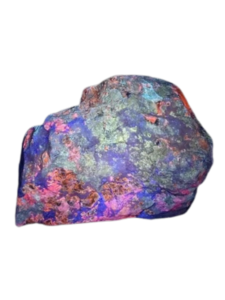
The hackmanite gemstone is known for optical properties including luminescence and tenebrescence. It can change color when exposed to ultraviolet radiation, UV light, or even x-ray and gamma sources. This ability to change color is linked to reversible photochromism, where electron shifts within the crystal structure respond to a specific wavelength and light source. Hackmanite shows fluorescence under short-wave ultraviolet and may be restored quickly by exposure to short-wave ultraviolet light or slowly by storing it in a dark place for minutes to hours after being exposed to sunlight.
Natural hackmanite occurs in a range of colors and may exhibit tenebrescence more strongly than synthetic hackmanite. Its cubic crystal system can produce octahedral forms, and gem-quality hackmanite may be cut into a facet or used as faceted hackmanite in jewelry such as a bracelet. Mineral collectors value these rare gems for their photochromic properties and unusual glow-in-the-dark material effect. Some connect it with healing crystals and a chakra focus, and care for hackmanite often includes advice to store hackmanite jewelry separately to protect its physical properties.
Hackmanite chakra association
Hackmanite is most often connected with the third eye chakra. This energy center is linked to perception, awareness, and deeper insight. Because Hackmanite reacts to light and shifts in color, it is commonly associated with expanding inner vision and recognizing what is not immediately obvious. When placed near the forehead during meditation, it may support clearer thinking and a stronger connection to intuition while helping quiet mental distractions in a natural way.
Some practitioners also connect Hackmanite with the crown chakra. This chakra relates to higher understanding and spiritual connection. Hackmanite is believed to create a bridge between logical thought and spiritual awareness, allowing insight to feel grounded rather than overwhelming. Its presence is often described as supportive during reflection, especially when focusing on personal growth and greater perspective.
How much is Hackmanite worth?
Hackmanite varies widely based on color, size and clarity just like many minerals/crystals. Small tumbled pieces that show a light reaction, for instance, can sell for around $20 to $60. Rough chunks with some visible color change and decent size generally range from about $50 to $150. Well cut, clean crystals that display a strong shift in color when exposed to light tend to fetch higher prices. These can often be found in the range of $150 to $400 for medium sized specimens.
Larger, high quality pieces that show vibrant color change and minimal flaws may be priced from about $400 to $800 or more. Collector grade stones with exceptional color change or unique patterns have been listed at prices above $1000. Natural crystals with good transparency and strong visual appeal usually attract more interest from collectors.
Hackmanite properties
| Hackmanite property | What it is like |
|---|---|
| Mineral group | Sodalite group, a variety of sodalite |
| Chemical makeup | Sodium aluminum silicate with sulfur that can affect color behavior |
| Color range | White, gray, pale pink, lavender, violet, blue, greenish tones in some material |
| Tenebrescence | Can darken after UV or strong light exposure, then fade back over time |
| Fluorescence | Often reacts under UV light, with strength varying by locality and specimen |
| Transparency | Opaque to translucent |
| Crystal system | Isometric |
| Typical habit | Massive, granular, or in blocks within host rock, distinct crystals are less common |
| Luster | Vitreous to dull depending on surface and texture |
| Streak | White |
| Hardness | About 5.5 to 6 on the Mohs scale |
| Cleavage | Poor to indistinct |
| Fracture | Uneven to conchoidal |
| Specific gravity | Roughly 2.2 to 2.4 |
| Common hosts | Alkaline igneous rocks, pegmatites, and related formations |

