White jade has traveled across mountains, rivers, and deep underground layers, forming in some of the most unique places on earth over long periods of time. From remote riverbeds in China to rugged mining regions in Myanmar and icy landscapes in Russia, this stone appears in locations shaped by powerful natural forces. Each source carries its own story, with terrain and pressure shaping how white jade looks and feels. In today’s guide, let’s explore where it is found, you start to see how geography and time come together to create something that feels rare, clean, and deeply connected to the earth.
White Jade meaning
Calmer energies: White jade is often linked to a calm and balanced state within your emotional body, where thoughts may feel less heavy. It is seen as a stone that connects with peaceful awareness, helping you move through situations with a clearer mindset all while keeping your emotions from becoming overwhelming or scattered.
Thought awareness: This stone is also often connected to mental clarity, where your thoughts may feel more organized and easier to understand without all of that confusion building up. It is often associated with clear thinking and simple decision making, allowing you to process information at a steady pace while staying focused on what truly matters in the moment.
Energy purity: White jade is often viewed as a protective stone that may help create a sense of clean and pure energy around you. It is linked with filtering out unwanted influences while supporting a space that feels lighter and more stable, allowing your energy to remain centered and less affected by outside pressure.
White Jade spiritual meaning
White jade is often connected with a calm spiritual energy that may help your inner state feel more centered all while your awareness becomes clearer and more focused, creating a sense of balance between your emotional and spiritual self. It is linked with purity, where your energy may feel lighter and more refined, allowing a deeper connection to peaceful presence and inner understanding. This stone is also associated with protection on a spiritual level, where your energy may feel supported and less influenced by outside tension, helping you remain grounded while maintaining a clear and stable flow of energy within.
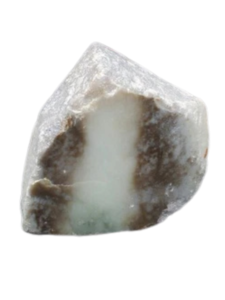
White Jade pricing
White jade ranges widely in price depending on quality and finish, where raw or lower grade pieces may fall between $5 and $50 while simple polished stones and small carvings often range from $10 to $150, and mid grade jewelry or detailed carvings may sit between $50 and $500 as craftsmanship improves. Higher quality white jade with cleaner texture and stronger appearance is often priced between $500 and $2,000, while premium and collector level+ pieces with refined structure and rarity may range from $2,000 to $10,000 or much more.
Where is it found?
China: White jade is strongly linked to regions in western China, especially in Xinjiang where deposits are found near the Kunlun Mountains. The area around the Yurungkash River and Karakash River is known for producing white jade that forms within riverbeds and nearby deposits, where material is shaped and moved over long periods.
Myanmar: Northern Myanmar is another key source of jade, with mines located in Kachin State near Hpakan. This region is known for jadeite, including lighter and white material that is extracted from large mining zones where jade forms deep within the earth and is brought up through mining operations.
Russia: White jade deposits are found in eastern Russia, especially in Siberia near Lake Baikal. The region includes areas such as the Sayan Mountains where nephrite jade forms within metamorphic rock zones and is mined from both surface and underground locations.
Canada: In British Columbia, white jade is found in several mining areas including regions near Cassiar and Dease Lake. These locations are known for nephrite deposits where jade forms within mountain ranges and is collected from both primary deposits and river systems.
New Zealand: New Zealand contains nephrite jade deposits known as pounamu, with sources located on the South Island in areas such as the West Coast and around the Arahura River. White and pale jade material is found within riverbeds and mountainous terrain where natural processes shape the stone over time.
Guatemala: In Central America, Guatemala is known for jadeite deposits located in the Motagua River Valley. This region contains a range of jade colors including white, where material is found within river systems and nearby geological formations.
White Jade vs Green Jade
| Feature | White Jade | Green Jade |
|---|---|---|
| Color | White to creamy tones with a soft and clean appearance | Light to deep green tones with a rich and vivid look |
| Energy Focus | Linked with calm awareness and a clear inner state | Linked with growth, vitality, and active energy |
| Spiritual Meaning | Connected to purity, balance, and inner clarity | Connected to abundance, strength, and forward movement |
| Common Use | Often used for calming energy and mental clarity | Often used for attracting success and building confidence |
| Appearance | Smooth with a soft glow and simple visual feel | Bold color with stronger visual depth and variation |
| Value Range | Common pieces range from $10 to $300 with higher quality reaching into thousands | Common pieces range from $20 to $500 with premium types reaching much higher |
| Rarity | High quality forms are less common but widely available overall | High quality green jade is often more sought after and can be rarer depending on type |
| Overall Feel | Feels more subtle and balanced in energy | Feels more active and strong in energy |
White Jade properties
| Property | Details |
|---|---|
| Mineral Type | Nephrite or jadeite depending on composition |
| Color | White to creamy tones with possible translucent areas |
| Luster | Waxy to smooth surface appearance |
| Hardness | 6 to 7 on the Mohs scale |
| Transparency | Opaque to slightly translucent |
| Texture | Fine grained and compact structure |
| Composition | Calcium magnesium silicate for nephrite or sodium aluminum silicate for jadeite |
| Formation | Metamorphic environments under high pressure conditions |
| Fracture | Splintery to uneven break pattern |
| Specific Gravity | 2.9 to 3.3 depending on type |

