Hemimorphite stands out for its bright blue to teal color and eye catching crystal shapes that often stop collectors mid scroll. It shows up in raw crusts, smooth cabochons, and bold display pieces that feel both earthy and striking. From natural fan shaped crystals to polished stones used in jewelry, hemimorphite has a look that draws attention quickly and keeps people curious about where it comes from and why it looks so different. In today’s guide, let’s dive in and see what it’s all about.
Hemimorphite meaning
Emotional clarity: Hemimorphite often centers around emotional clarity that may feel calm and honest rather than heavy. This stone is commonly linked to expressing feelings without pressure, where your thoughts and emotions could feel easier to notice and sort through in those everyday moments.
Communication and self expression: Hemimorphite is often associated with open communication that may feel natural. It is commonly viewed as a stone connected to speaking from personal truth, where words could feel clearer and less tangled during conversations with others.
Emotional release and reflection: It is often tied to emotional release through reflection rather than intensity. It may be seen as a stone that supports letting old emotional patterns soften over time, allowing personal awareness to grow at a comfortable pace.
Spiritual awareness: On a spiritual level, hemimorphite is often linked to inner awareness. It may be viewed as a stone connected to spiritual understanding that develops quietly, where personal beliefs and inner values could feel easier to recognize and trust.
What is Hemimorphite?
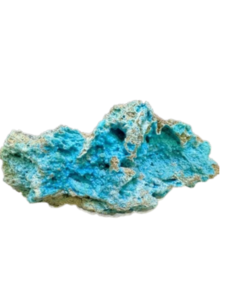
Hemimorphite is a zinc silicate mineral known in mineralogy for its distinctive hemimorphic crystal growth, where each end of the crystal develops differently. This hemimorphite crystal forms in the oxidation crust of zinc ore deposits and is often found with smithsonite, cerussite, and chrysocolla. Mexico has produced well known material, along with Namibia and Upper Silesia, making locality important for collector’s pieces. Blue hemimorphite is especially recognizable for its blue green to teal tones, sometimes compared visually to turquoise, and it often appears in fan shaped or botryoidal crystalline forms.
In economic geology, hemimorphite is considered an ore of zinc rather than a primary gemstone, though it is still cut into cabochons, pendants, brooch pieces, and decorative gemstones. Due to low hardness and perfect cleavage, it is difficult to cut and polish, so cabochons are more common than facet stones. Natural crystals and hemimorphites are usually cleaned gently with warm water and a soft brush. In scientific study, properties of hemimorphite include hydrous structure, proton disorder in dehydrated hemimorphite, and detailed x ray structure refinement at low and ambient temperatures, including refinement at low and ambient conditions down to 110 K using IR spectroscopy. Historically, the mineral was described by Kenngott and named in connection to James Smithson, with later structural work by mineralogists such as Kohler, Armbruster, Libowitzky E, and Rossman G R.
Is Hemimorphite toxic?
Hemimorphite is generally considered low risk for everyday handling and collecting. It is a zinc silicate mineral, so concerns mainly involve dust created during cutting or grinding. Inhaling fine particles may cause irritation, which is why basic protection and hand washing are recommended during lapidary work.
Where is Hemimorphite found?
Mexico: Hemimorphite is commonly found in Mexico, especially in areas known for historic zinc mining. The Ojuela Mine in Mapimí, Durango is frequently associated with well known material, where the mineral occurs in oxidized zones of older mine workings alongside other secondary zinc minerals.
Namibia: Namibia is another important location for hemimorphite, particularly from the Tsumeb Mine near the town of Tsumeb. Additional material is also associated with the Skorpion Mine near Rosh Pinah, where hemimorphite forms in weathered zinc rich deposits within the region.
Morocco: In Morocco, hemimorphite is associated with the Touissit area in the eastern part of the country. This region is known for non sulfide zinc deposits, where hemimorphite develops within altered ore zones connected to long standing mining activity.
Italy: Italy has recorded hemimorphite occurrences mainly in Sardinia. The mineral is linked to older mining districts where zinc ores were once extracted, and it appears in oxidized environments tied to those historic deposits.
United States: In the United States, hemimorphite is found in parts of Arizona and Nevada. These locations are tied to abandoned zinc and lead mines, where the mineral forms as a secondary product in dry, oxidized conditions common to the region.
Is it rare?
Hemimorphite is generally not considered rare, but quality material can feel less common depending on color, form, and geographical locations. Many deposits are tied to old zinc mines that are no longer active, which limits new supply over time. Well formed crystals, bright blue material, and pieces from classic locations tend to appear less often than massive or pale specimens. Availability can vary widely by market and location, so some forms may feel easy to find while others appear only occasionally.
Hemimorphite price
The price varies widely based on form, size, and visual quality. Small rough pieces commonly range from $5 to $50, especially when crystal detail is limited. Polished stones and carvings often fall between $30 and $150 depending on finish and size. Crystal clusters with visible, well formed structures usually range from $75 to $400, with larger display pieces toward the upper end. High quality collector specimens with strong color, sharp crystal growth, or classic locality association can range from $300 to $1,000 or higher, depending on overall presentation.
Hemimorphite properties
| Property | Description |
|---|---|
| Mineral type | Hemimorphite is a zinc silicate mineral commonly found in oxidized zinc deposits. |
| Chemical composition | It is composed of zinc, silicon, oxygen, and hydrogen, forming a hydrated silicate structure. |
| Crystal system | Hemimorphite forms in the orthorhombic crystal system with crystals that grow unevenly at each end. |
| Crystal habit | It commonly appears as prismatic crystals, botryoidal masses, crusts, or compact aggregates. |
| Color | Colors range from blue and blue green to white, colorless, pale green, and light brown. |
| Luster | The surface shows a vitreous to silky appearance depending on crystal formation. |
| Transparency | Hemimorphite can be transparent, translucent, or opaque based on thickness and structure. |
| Hardness | It has a Mohs hardness of about 4.5 to 5, making it softer than quartz. |
| Cleavage | Cleavage is poor, and the mineral more often breaks unevenly. |
| Fracture | Fracture is typically uneven to subconchoidal. |
| Density | Specific gravity generally falls between 3.4 and 3.5. |
| Streak | The streak is white. |

