Heliodor stands out the moment you see it, flashing yellow to golden light that feels impossible to ignore, with crystals pulled from famous mining regions around the world that collectors actively watch for. From rugged pegmatites to prized specimen finds, its story blends geology, rarity, and visual impact, making heliodor a gemstone that continues to draw attention wherever high quality material surfaces, in this guide, let’s explore everything about it, from its meaning to locations.
Heliodor meaning
Mental clarity: Heliodor may connect with mental clarity as thoughts often feel easier to organize and distractions feel less dominant, allowing ideas to come through with more order while your focus feels cleaner and less scattered during everyday moments and simple decision making.
Confidence: Heliodor may relate to confidence that feels calm and personal, where self trust develops quietly and your voice feels more natural, helping choices feel rooted in your own perspective without pressure, tension, or the need for outside approval.
Motivation: Heliodor may be associated with motivation that feels consistent and available, supporting follow through as tasks feel more manageable and effort feels less draining, creating a sense of movement that supports goals without feeling rushed or overwhelming.
Optimism: Lastly, it may connect with optimism that feels grounded and realistic, where emotional weight softens and a brighter outlook feels easier to access, allowing you to move through challenges with a lighter emotional tone and a sense of hope that feels stable.
Where is Heliodor found?
Namibia: Namibia is one of the best known sources of heliodor, with material coming primarily from the Erongo Mountains region. Pegmatite mines in this area have produced well formed heliodor crystals with yellow to golden yellow color, good clarity, and strong collector appeal, often appearing as clean specimens or facetable stones.
Brazil: Brazil has yielded heliodor from several pegmatite localities, especially within Minas Gerais. These deposits produce yellow heliodor ranging from light green to greenish-yellow, with some stones showing softer golden tones, and the material is often found alongside other beryl family minerals.
Ukraine: Ukraine is known for heliodor occurrences in the Volyn province, where beryl deposits have produced yellow to golden-yellow crystals. Stones from this region are often noted for natural color and clarity, making them desirable for both specimens and gem cutting.
Madagascar: Madagascar has produced heliodor from pegmatite zones that also host other beryl varieties. Material from this country often shows yellow-green to golden-yellow color, with crystals appearing as rough specimens or cut gemstones depending on clarity and formation quality.
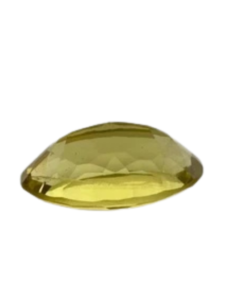
What is Heliodor?
Heliodor is a yellow variety of mineral within the beryl family, often called the gift of the sun, with its name drawn from greek words helios and doron that translate to sun and gift, giving rise to the meaning of heliodor as a stone associated with the sun.
This heliodor gemstone is composed of beryllium and classified as a cyclosilicate, sharing physical properties with emerald while standing apart through its yellow to golden yellow color that comes from the presence of iron as an impurity. Yellow heliodor crystals formed in pegmatites and related environments, with notable locality sources in Namibia, Brazil, Ukraine, and Madagascar, and some province level finds prized by collectors seeking high quality specimens with good clarity and natural color.
First recognized as a trade name in 1912 and linked historically to Kaiser era mineralogy, heliodor is often compared visually to yellow diamond or topaz, though its hardness of 7.5 to 8 on the Mohs scale and its yellow-green to greenish-yellow tones give it a distinct identity. In metaphysical properties, heliodor is often associated with the solar plexus chakra, vitality, balance, self-confidence, assertiveness, emotional healing, and enlightenment, with some viewing it as an amulet that radiates golden light and presence rather than force.
Heliodor pricing
Heliodor pricing often varies based on size, clarity, and overall appearance, with small tumbled or raw pieces commonly seen around $15 to $40, simple polished stones and cabochons often ranging from $40 to $120, well cut faceted stones frequently falling between $150 and $600, and larger high quality specimens or finished jewelry pieces sometimes ranging from $800 to $3,000 or more depending on presentation and visual appeal.
Heliodor properties
| Property | Heliodor (Beryl) physical details |
|---|---|
| Mineral group | Beryl |
| Chemical family | Silicate mineral |
| Chemical formula | Be3Al2Si6O18 |
| Crystal system | Hexagonal |
| Crystal habit | Prismatic crystals, often hexagonal with flat or slightly tapered ends, also found as massive pieces |
| Color | Yellow to golden yellow, sometimes greenish yellow |
| Cause of color | Commonly linked to iron content within the beryl structure |
| Streak | White |
| Luster | Vitreous |
| Transparency | Transparent to translucent |
| Hardness (Mohs) | 7.5 to 8 |
| Cleavage | Poor or indistinct |
| Fracture | Conchoidal to uneven |
| Tenacity | Brittle |
| Specific gravity | About 2.68 to 2.80 |
| Refractive index | About 1.57 to 1.60 |
| Birefringence | About 0.005 to 0.009 |
| Optical character | Uniaxial |
| Pleochroism | Often weak to moderate, with yellow tones that can look slightly different by viewing angle |
| Fluorescence | Typically none to weak, can vary by specimen |
| Common treatments | Heat treatment is sometimes used to shift or improve color, disclosure depends on seller |
| Typical occurrence | Pegmatites and granitic environments, also in mica schists and alluvial deposits |

