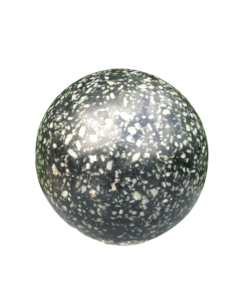
Guinea Fowl Jasper is one of those stones that instantly catches your eye with its bold speckles and natural contrast. It has a grounded, earthy look that feels both raw and refined at the same time. Beyond its unique pattern, many people are drawn to it for its deeper meaning and steady energy. If you love stones that feel strong, balanced, and quietly powerful, this one definitely stands out. To learn more about it, let’s take a dive and see what it’s all about.
Guinea Fowl Jasper meaning
Grounded protection: Guinea Fowl Jasper is often connected with protection that feels practical and rooted in daily life. Its speckled pattern reflects a sense of balance between light and dark, which many believe represents awareness of both strengths and weaknesses. Metaphysically, it is seen as a stone that helps create a feeling of security, especially during times of uncertainty or change. It is thought to support clear boundaries so outside pressure feels less overwhelming.
Emotional stability: This stone is also associated with emotional balance and inner control. Many believe it helps calm reactive feelings by bringing attention back to what truly matters. Instead of amplifying emotions, it is said to regulate them so reactions feel more thoughtful and measured. People who work with Guinea Fowl Jasper often view it as a reminder to pause, reflect, and respond with intention rather than impulse.
Focus: Guinea Fowl Jasper is also linked to mental clarity and organized thought. Its energy is often described as structured and grounded, helping scattered ideas come together in a more logical way. It is believed to support concentration when tasks feel overwhelming. By keeping attention centered on priorities, this stone is thought to strengthen decision making and reduce mental clutter.
Strength during change: Metaphysically, Guinea Fowl Jasper is even connected to resilience during transitions. Life shifts can bring doubt or hesitation, as you may know, and this stone is often seen as a stabling presence through those periods. It is believed to reinforce confidence from within rather than from outside validation. Many view it as a companion for personal growth that unfolds gradually and with purpose.
Where is Guinea Fowl Jasper found?
South Africa: South Africa is considered the primary and most recognized source of Guinea Fowl Jasper. It is typically found in areas rich in jasper and other silica-based minerals, often within ancient volcanic rock formations. The stone forms through mineral-rich fluids moving through cracks and cavities over long periods of time. The distinct speckled pattern associated with this material is created by contrasting mineral inclusions that settle and solidify within the host rock.
Madagascar: Madagascar produces a wide variety of patterned jaspers, and some stones sold as Guinea Fowl Jasper come from its mineral-rich regions. The island’s complex geological history, shaped by volcanic activity and tectonic shifts, creates ideal conditions for silica deposits to develop unique markings. The spotted and mottled patterns form as different minerals crystallize together, giving the stone its characteristic speckled appearance.
Brazil: Brazil is well known for large jasper deposits located in volcanic and sedimentary environments. In certain regions, silica-rich solutions harden within cavities and fractures, forming patterned jaspers with contrasting spots and markings. Material resembling Guinea Fowl Jasper may come from these deposits, where iron and other mineral inclusions create the dark and light patterning that defines its look.
India: India has long been a major supplier of decorative jaspers, including varieties with strong contrast and speckled designs. These stones are typically mined from sedimentary rock beds where mineral content varies across layers. Over time, pressure and mineral infiltration create patterned surfaces that resemble the look associated with Guinea Fowl Jasper, making Indian deposits another possible source.
United States: In the United States, similar spotted jaspers have been found in western states such as Oregon, Arizona, and California. These areas contain extensive volcanic rock formations where silica deposits fill cracks and voids in cooling lava. As minerals settle and solidify within these spaces, they create contrasting spots and brecciated patterns that closely match the appearance of Guinea Fowl Jasper.
How much does Guinea Fowl Jasper cost?
Guinea Fowl Jasper pricing varies based on size, quality, and pattern clarity. Small tumbled stones, for instance, usually sell for around $3 to $10 each depending on how well the spots and color contrast show. Medium-sized polished pieces or palm stones, on the other hand, often range from $15 to $50 with rarer patterns toward the higher end. Larger slabs or display pieces can be priced from $60 to $150 or more if the pattern is particularly distinct and visually appealing. Drilled beads for jewelry might cost $10 to $40 per strand, again depending on size and consistency of the pattern. Custom cuts or high-grade specimens intended for collectors can sometimes reach $150 to $300+, especially in larger formats or if the material has exceptional visual appeal.
Guinea Fowl Jasper chakra
Guinea Fowl Jasper is most commonly connected to the Root Chakra. This energy center is located at the base of the spine and relates to stability, safety, and physical presence in the world. Because Guinea Fowl Jasper carries a dense and grounded mineral structure, it is often associated with strengthening that foundational energy. Many believe it supports a deeper sense of security and connection to daily life, especially during periods of stress or uncertainty.
The speckled pattern of this stone is sometimes viewed as a reflection of balance between light and dark aspects within the self. When connected to the Root Chakra, it is thought to reinforce inner strength and personal boundaries. Rather than creating intense energetic movement, it is often described as promoting a grounded and centered feeling that supports steady progress and practical thinking.
Guinea Fowl Jasper properties
| Property | Details |
|---|---|
| Mineral family | Jasper, microcrystalline quartz (chalcedony) |
| Composition | Silicon dioxide (SiO₂) with mineral inclusions that create the speckled look |
| Hardness (Mohs) | 6.5 to 7 |
| Luster | Dull to waxy when polished |
| Transparency | Opaque |
| Color range | Cream, tan, beige, brown, gray, black, sometimes reddish tones |
| Pattern | Speckled or spotted, often resembling a dotted or peppered surface |
| Streak | White |
| Cleavage | None |
| Fracture | Conchoidal to uneven |
| Crystal system | Trigonal (quartz structure), typically massive as jasper |
| Density (SG) | About 2.58 to 2.65 |
| Common finishes | Tumbled stones, palm stones, cabochons, beads, slabs, carvings |

