Glauberite is one of those minerals that quietly slips under the radar, yet shows up with a surprising mix of science, history, and unusual crystal behavior. Known for forming in salty conditions and changing shape over time, this mineral has caught the attention of mineralogists for centuries. From its link to early chemistry and glauber’s salt to its tendency to alter and dissolve, glauberite stands out as a mineral with far more going on than its name suggests. In today’s guide, let’s talk about it in detail.
Glauberite meaning
Emotional balance: Glauberite is often viewed as a stone connected with emotional balance, especially during times when feelings feel layered or mixed. Its metaphysical meaning may relate to allowing emotions to surface and pass without holding onto them, creating a sense of emotional clarity that feels lighter and more open over time.
Mental clarity: Another metaphysical idea linked to Glauberite centers on mental clarity and the sorting of thoughts. This stone may be associated with helping the mind slow its racing patterns, making it easier to notice what thoughts matter most while others fade into the background in a natural and unforced way.
Transitions: Glauberite is also commonly connected with periods of transition and personal change. Its meaning may point toward supporting internal shifts as life moves from one phase to another, helping changes feel more understandable and less overwhelming as new routines and perspectives begin to take shape.
Glauberite spiritual meaning
Grounding: On a spiritual level, Glauberite may be linked to grounding during moments of inner change, especially when beliefs or values begin to shift. Its spiritual meaning often relates to staying present as old perspectives loosen, allowing spiritual growth to unfold in a calmer rhythm without forcing direction or outcomes.
Inner truth: Another spiritual meaning connected to Glauberite may focus on awareness of inner truth as personal understanding deepens over time. This stone is often associated with noticing subtle inner signals and quiet realizations, allowing spiritual awareness to unfold gradually as perception becomes clearer and more reflective without pressure or expectation.
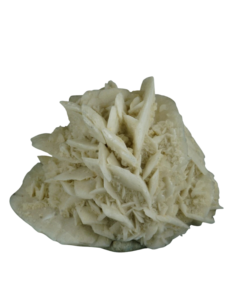
Where is Glauberite found?
Spain: Glauberite is often connected with central and northern parts of Spain, especially around Villarrubia de Santiago in Toledo within Castile La Mancha, where the El Castellar Mine, also known as Virgen del Castellar Mine, is frequently mentioned. Alcanadre in La Rioja is another Spanish location tied to this mineral, commonly linked with layered evaporite deposits formed in dry basin environments.
United States: In the United States, Arizona stands out with Camp Verde in Yavapai County, where the Camp Verde Salt Mine is regularly associated with glauberite occurrences. California is also well known for this mineral, particularly at Searles Lake in San Bernardino County, along with the Bertram Mine near Bertram Siding in Imperial County. Saline Valley in Inyo County is another area where glauberite has been recorded within desert salt flats.
Turkey: Turkey is another region where glauberite appears, mainly in western parts of the country. The Emet Basin is often mentioned, especially in connection with borate rich evaporite systems, and the Doğanlar area within this basin is frequently linked to glauberite found alongside other sulfate minerals.
Australia: In Australia, glauberite is commonly associated with salt lake regions. Northern Victoria is sometimes referenced in relation to buried salt beds, while Lake Bumbunga in South Australia is another location connected with glauberite forming within saline mining zones.
Austria: Austria is occasionally listed as a source of glauberite, particularly in the Salzburg region. These occurrences are generally linked to ancient salt deposits where glauberite appears among other evaporite minerals formed under long term dry conditions.
Is it rare?
Glauberite is generally considered uncommon rather than truly rare within the mineral world. It may form only in specific evaporite environments where saline waters change over time, which limits how often it appears naturally. Even in places where it occurs, crystals are often small, fragile, or short lived, making intact specimens less frequently seen. Many deposits focus on industrial salts instead of collectible crystals, so material is not widely saved. Because of these factors, glauberite may feel rare to collectors, even though it exists across several regions worldwide in limited settings shaped by climate, geology, and shifting water chemistry patterns.
What is Glauberite?
Glauberite is a sulfate mineral made from sodium and calcium, often discussed alongside glauber’s salt due to its chemistry and historical naming. It was named in 1808 after German alchemist Johann Rudolf Glauber, also referenced as named after German alchemist Johann, who lived from 1604–1668. In mineral glauberite descriptions and glauberite mineral data, it is usually placed within evaporite minerals such as halite, anhydrite, and thenardite, forming in saline environments where water chemistry shifts over time.
Glauberite is often a pseudomorph, meaning it may replace another mineral after that original material has dissolved away. Anhydrite is commonly noted as the starting mineral, with glauberite pseudomorphed into its original crystal habit. Because of this process, many specimens are described as often a pseudomorph rather than freshly grown crystals. These forms may appear dipyramidal, striate, or show indexed faces like 001, 110, and 111.
The mineral is soluble and may alter as conditions change, which explains why it is sometimes described as a rare mineral rather than a durable gem. Glauberite mineral structure has been studied in detail, with refinement of the crystal structure and vibrational analysis discussed in sources such as American Mineralogist, including work attributed to researchers like Brongniart, Chen, and Zhang. It is generally described as a mineral that forms in saline environments with other evaporite minerals, sometimes within clay rich beds or hydrothermal deposits, where changing climate and chemistry shape how it develops over time.
Glauberite properties
| Property | Glauberite |
|---|---|
| Mineral class | Sulfate |
| Chemical formula | Na2Ca(SO4)2 |
| Composition | Sodium calcium sulfate |
| Crystal system | Monoclinic |
| Typical crystal habit | Tabular to prismatic crystals, sometimes wedge-like, also granular to massive |
| Color | Colorless, white, gray, pale yellow, pale brown |
| Luster | Vitreous |
| Transparency | Transparent to translucent |
| Streak | White |
| Mohs hardness | 2.5 to 3 |
| Cleavage | Distinct in several directions |
| Fracture | Uneven to splintery |
| Specific gravity | About 2.7 |
| Solubility | Soluble in water and may alter in humid conditions |
| Fluorescence | Usually none reported, may vary by locality |
| Common formation setting | Evaporite deposits, salt flats, saline lake basins, some salt mines |
| Common associations | Halite, gypsum, anhydrite, thenardite, calcite, other evaporite minerals |
| Collecting notes | Crystals can be fragile and can degrade with moisture, dry storage is often preferred |

