Geyserite is one of those materials that feels raw, dramatic, and shaped entirely by extreme natural conditions rather than quiet underground growth. It forms where heat, water, and silica meet at the surface, building layer after layer through eruption, flow, and evaporation. Its texture, structure, and appearance tell a story of movement, pressure, and repetition, capturing moments of geothermal activity frozen into solid form through time. In today’s guide, let’s explore Geyserite in detail to see what it’s all about.
Geyserite meaning
Grounded presence: Geyserite may be linked with a grounded presence that helps your thoughts feel less scattered and more connected to the moment you are in, allowing emotional reactions to soften naturally as awareness settles into the body rather than racing ahead of it. Over time, this stone may support a calmer inner rhythm that feels anchored rather than forced, creating space for clearer thinking without pressure.
Emotional release: Geyserite may reflect the idea of release happening in cycles, where emotions surface, pass through, and move on much like natural processes in the earth, helping you recognize that emotional shifts do not need to be rushed or controlled. Working with this stone may allow feelings to rise and fall in a way that feels organic, giving permission for change without resistance.
Connection to earth energies: Geyserite may be associated with a deeper connection to earth energy, supporting patience as things unfold in their own timing rather than following expectations. This connection may help you slow internal urgency, allowing personal growth to develop gradually while maintaining trust in long-term processes that are shaped over time rather than instant results.
Where is Geyserite found?
Iceland: Geyserite is commonly associated with geothermal regions in Iceland, where active geysers and hot springs create the right surface conditions for silica-rich deposits to appear around vents, runoff channels, and eruption pools. These areas are closely tied to volcanic landscapes where geothermal activity remains visible and ongoing.
United States: In the United States, geyserite is closely linked to Yellowstone National Park, where it appears near famous geyser basins and hot spring terraces. The stone is connected to long-standing geothermal systems spread across wide surface areas shaped by repeated thermal activity.
New Zealand: Geyserite is also associated with New Zealand, especially around the geothermal zones near Rotorua, where silica deposits outline former and active hot spring systems. These regions are known for extensive surface features created by mineral-rich waters over time.
Chile: In Chile, geyserite is connected to high-altitude geothermal fields such as El Tatio, where extreme temperature shifts and mineral-heavy waters shape surface silica formations in open geothermal basins.
Italy: Geyserite occurrences in Italy are linked to geothermal zones in Tuscany, where natural steam vents and hot springs have left behind mineral deposits tied to historic geothermal activity.
Japan: In Japan, geyserite is associated with geothermal areas near Beppu, where hot springs and steam vents dominate the landscape and surface mineral buildup reflects long-term thermal circulation.
Kenya: Lastly, Geyserite is also connected to parts of Kenya, particularly around geothermal zones near Lake Bogoria, where hot springs line the shoreline and silica deposits appear alongside active thermal features.
How does Geyserite form?
Geyserite forms in areas where underground water becomes heated by geothermal activity and rises toward the surface carrying dissolved silica along with it. As this hot water reaches open air, changes in temperature and pressure allow silica to begin separating from the water and settling onto nearby surfaces.
And, as the hot water cools after reaching the surface, silica slowly accumulates layer by layer rather than all at once. Repeated geyser eruptions or steady overflow from hot springs allow new material to build over older deposits, creating dense silica coatings around vents, channels, and splash zones.
Over long periods, continued exposure to silica-rich water allows these layers to thicken and harden into geyserite. The final form reflects how the water moved across the surface, preserving textures shaped by flow patterns, splashing, and evaporation rather than crystal growth deep underground.
Where is Geyserite?
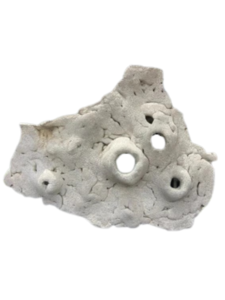
Geyserite is a silica sinter deposit that forms around hot springs and geysers in geothermal settings where silica-rich hot water rises through the ground and reaches the surface. It develops as dissolved silica separates from hot water during eruption cycles and gradual cooling, settling into layers rather than forming a true crystal. Although it is chemically related to quartz, geyserite is made of opaline silica such as opal-A and opal-CT, giving it an amorphous structure instead of an ordered crystalline structure.
This material is considered sedimentary in origin and closely tied to hydrothermal activity driven by magma below the surface. As groundwater flows upward, silica dissolves into the hot water and later deposits as the water erupts, spreads, and evaporates. Over time, repeated deposition creates porous surfaces and rounded botryoidal forms that reflect how the water moved rather than internal crystal growth.
Geyserite often forms alongside microbial mats, which can influence how silica settles and becomes preserved within hot spring deposits. Its mineralogy reflects high water content during formation and gradual change as layers build and harden. The result is a dense yet textured silica deposit shaped by geothermal processes, hydrothermal circulation, and continuous surface deposition rather than deep underground crystallization.
Geyserite properties
| Property | Description |
|---|---|
| Mineral type | Siliceous sinter formed from surface geothermal activity |
| Composition | Primarily silica deposited from hot spring and geyser water |
| Texture | Often dense with layered or botryoidal surfaces shaped by flowing water |
| Hardness | Comparable to other silica-based materials |
| Color range | Commonly white, cream, gray, tan, or pale brown |
| Luster | Dull to slightly waxy depending on surface exposure |
| Transparency | Opaque |
| Crystal form | Non-crystalline with compact surface growth |
| Fracture | Irregular and uneven |
| Density | Moderate due to compact silica layering |

