Antlerite is one of those minerals that immediately stands out once you know what to look for, especially if copper minerals catch your eye. Its deep green color, needle like crystal growth, and strong connection to famous copper mines make it a favorite among mineral collectors. Often found in dry, oxidized environments, antlerite tells a clear story about how copper reacts at the surface. In this guide, let’s dive deep and see what it’s all about.
Antlerite meaning
Grounding: Antlerite is often linked with grounding and staying connected to everyday life. And, it is commonly associated with awareness of responsibilities, routines, and practical choices. This meaning focuses on feeling present during daily tasks. Attention may feel more anchored to what needs to be done.
Emotional awareness: This stone is frequently connected with emotional awareness and reflection. It is often seen as supportive when recognizing patterns tied to feelings and reactions. Emotions may feel easier to observe without becoming overwhelming. The focus stays on understanding rather than suppression.
Inner strength: Antlerite is commonly associated with quiet inner strength. This meaning relates to endurance during pressure or long stretches of uncertainty. Strength is viewed as something built over time. Progress continues without relying on outside reassurance.
Mental clarity: Many associate antlerite with clearer thinking and focus. Thoughts may feel more organized and deliberate. Decisions are often linked to logic and self awareness. The emphasis stays on calm reasoning rather than impulsive reactions.
Where is antlerite found?
United States: In the United States, antlerite is most commonly associated with oxidized copper deposits in the Southwest. Well known area include the Bisbee mining district, the Morenci Mine, and the Tintic Mining District, where it occurs as a secondary mineral in arid environments.
Chile: Chile is one of the most significant countries for antlerite due to its massive copper resources. Classic specimens come from the Chuquicamata area near Calama, forming in oxidized zones of copper sulfide deposits within the Atacama Desert region.
Mexico: In Mexico, antlerite is primarily found in northern copper mining regions. The Cananea Mine in Sonora, for instance, is a notable area , where arid conditions allow copper sulfates like antlerite to develop on exposed ore bodies.
Australia: Australian antlerite occurrences are linked to historic and modern copper mines, particularly in South Australia. Areas around Burra have produced specimens, typically forming as crusts or fibrous aggregates in weathered copper deposits.
Namibia: Namibia is known for producing well crystallized antlerite from oxidized copper zones. Specimens are commonly associated with the Tsumeb Mine near Tsumeb, an area famous for complex secondary copper minerals formed under dry conditions.
What is antlerite?
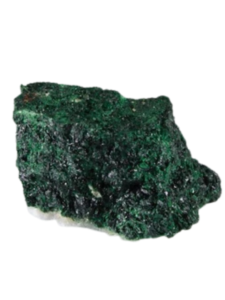
Antlerite is a copper sulfate mineral that forms as a secondary species in the oxidized zones of copper deposits, most often near the surface of a copper mine where sulfate rich waters interact with copper ore. This mineral was formally described in 1889 and later recognized as its own mineralogical species, distinct from related copper sulfate minerals such as brochantite.
Antlerite crystals commonly develop in acicular forms, growing as slender needles or fibrous clusters that coat rock surfaces or fill small cavities. Its green coloration ranges from deep green to darker tones depending on crystal thickness and exposure. Well known area include Chile, especially the Chuquicamata mine, one of the world’s largest copper mines, where antlerite specimens are frequently used as reference material in mineralogy collections. In the United States, notable finds come from Arizona, including areas associated with the Antler Mine, where oxidized copper ore zones support sulfate mineral formation. Antlerite is closely associated with other copper minerals such as malachite and brochantite, often appearing alongside them in complex copper sulfate assemblages.
As a copper sulfate mineral, its properties reflect surface level mineral growth rather than deep geological formation, making it a recognizable crystal for collectors studying sulfate mineral environments.
Antlerite properties
| Property | Description |
|---|---|
| Mineral type | Copper sulfate mineral |
| Chemical formula | Cu₃SO₄(OH)₄ |
| Crystal system | Monoclinic |
| Color | Dark green to blackish green |
| Luster | Vitreous to dull |
| Transparency | Translucent to opaque |
| Hardness | 3 to 3.5 on the Mohs scale |
| Streak | Pale green |
| Cleavage | Poor to indistinct |
| Fracture | Uneven to fibrous |
| Density | Approximately 3.9 g/cm³ |
| Habit | Fibrous, acicular, crusty, or massive |

