Chiastolite is one of those stones that instantly stands out, not because of color or shine, but because of what forms naturally inside it. Known for its unmistakable cross pattern, this gemstone has drawn attention from mineral collectors, historians, and crystal enthusiasts for centuries. Its story weaves together geology, symbolism, and cultural tradition, rooted in metamorphic processes and long journeys through time. From ancient records to modern crystal circles, chiastolite continues to spark curiosity. In today’s guide, let’s dive in and see what Chiastolite is all about.
Chiastolite meaning
Protection: Chiastolite is often linked to a sense of protection that may feel grounding during those stressful moments. Its energy is commonly associated with creating a feeling of separation between outside pressure and your inner space, which may help you move through daily life with clearer emotional boundaries and less mental interference.
Balance during change: Chiastolite is frequently connected to periods of transition, where life feels uncertain or uneven. It may be seen as a stone that supports balance when routines shift or plans change, allowing thoughts to settle into a more centered rhythm while you process new situations without feeling overwhelmed.
Inner focus: It is also associated with inner focus, especially when distractions feel constant. It may support a calmer mental flow that helps you stay connected to your own values and intentions, creating space for reflection without forcing outcomes or pushing emotions in any direction.
Chiastolite spiritual meaning
Grounding awareness: It is often connected to spiritual grounding that may help keep awareness rooted during reflective or inward moments. It is commonly associated with maintaining a sense of spiritual presence while staying connected to everyday reality, allowing deeper thoughts to surface without feeling scattered or disconnected from the physical world.
Inner clarity: Spiritually, it is also linked to spiritual clarity, especially during times of personal questioning or growth. Its energy may support a clearer inner perspective, helping spiritual insights unfold at a natural pace while maintaining a sense of calm understanding rather than emotional intensity or pressure.
Chiastolite chakra association
Chiastolite is most often connected with the root chakra, which is commonly linked to feelings of stability, safety, and connection to the physical world. This stone is often viewed as supporting a grounded state that may help you stay present in your body while moving through daily responsibilities and emotional experiences.
The energy of chiastolite is frequently associated with maintaining balance at the root level, especially during periods that feel demanding or unsettled. It may support a sense of structure and personal grounding, allowing thoughts and emotions to settle into a more centered rhythm without feeling forced or controlled.
Where is Chiastolite found?
Spain: Chiastolite is closely associated with northern Spain, especially the Asturias region. Areas around the town of Boal are widely known for well-formed specimens that come from metamorphic zones where heat and pressure shaped the stone over long periods of time.
United Kingdom: In the United Kingdom, chiastolite is linked to parts of Cornwall and nearby regions in southwest England. These occurrences are connected to older metamorphic belts, where the stone appears within altered shale and similar host rock near historic mining districts.
France: Chiastolite is also connected to western France, particularly Brittany. Specimens from this area are tied to metamorphic terrains that formed during ancient geological activity, with material showing up in scattered outcrops rather than large mining operations.
United States: In the United States, chiastolite is associated with select locations in California. Areas near Lancaster and surrounding desert regions are known for surface finds, where the stone appears within altered sedimentary rock exposed by erosion.
Australia: Lastly, Australia is another region linked to chiastolite, with occurrences tied to parts of New South Wales. Areas near older mining regions such as Broken Hill are known for metamorphic minerals, including chiastolite found within altered host rock layers.
What is Chiastolite?
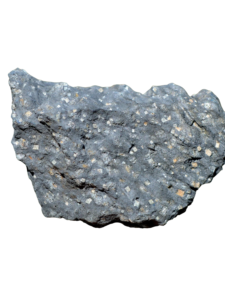
Chiastolite is a silicate gemstone and a variety of andalusite that forms within metamorphic rocks created from altered sediments. It is often recognized by a natural cross pattern that appears in square cross-sections of the crystal, caused by cross-shaped inclusions of carbon concentrated near the corners of andalusite crystals during growth.
This stone has long been known as the cross stone or lapis crucifer and has appeared in mineral and crystal information records dating back centuries, including early descriptions connected to pilgrims traveling to Santiago de Compostela. The cross pattern is commonly linked to a cycle of growth retardation and renewed growth, where impurities become concentrated along four radiating directions inside the crystal.
Chiastolite stones are frequently cut into tumbled stones or polished as simple gemstones, allowing the internal pattern to remain visible. In mineralogy, it is associated with euhedral crystals, muscovite, paragonite, and margarite, often forming as an andalusite porphyroblast within metamorphosed sedimentary rock. Over time, chiastolite has held geological and cultural importance, particularly in northwest Spain, where it has been viewed as both a mineral curiosity and a symbolic talisman.
Chiastolite properties
| Property | Chiastolite physical properties |
|---|---|
| Mineral group | Andalusite variety |
| Chemical formula | Al2SiO5 |
| Crystal system | Orthorhombic |
| Typical habit | Prismatic crystals, often with a dark cross pattern in cross-section |
| Color | Tan, brown, gray, reddish brown, commonly with black to dark inclusions |
| Luster | Vitreous to dull |
| Transparency | Opaque to translucent |
| Streak | White |
| Mohs hardness | 6.5 to 7.5 |
| Cleavage | Distinct in one direction, poor in others |
| Fracture | Uneven to splintery |
| Tenacity | Brittle |
| Specific gravity | About 3.1 to 3.2 |
| Refractive index | Approx. 1.629 to 1.650 |
| Birefringence | Approx. 0.008 to 0.011 |
| Optical character | Biaxial, commonly negative |
| Pleochroism | Often noticeable, ranging from yellowish to brownish tones |

