Bolivianite is a rare crystal variety known for its striking combination of purple and yellow tones that naturally form within a single quartz structure. Also known as ametrine, this Bolivian stone contains powerful calming and balancing energies. The rock’s composition blends amethyst and citrine, creating deep color zoning admired in both tumbled and sphere forms. And, many describe Bolivianite as a newly recognized gemstone in trade name use, believed to help jump start spiritual awareness during a quick and easy morning meditation. The stone is valued for its ability to help individuals ground themselves into mother earth through harmonious energy flow. Although often compared with minerals like fluorite, stichtite, and diaspore, high quality Bolivianite remains distinct in legend and geological formation. In today’s guide, let’s jump in and see what it’s all about.
Bolivianite meaning
Emotional clarity: Bolivianite is viewed as a crystal that represents a subtle balance between thought and emotion through its blend of purple and yellow tones. It may even symbolize a bridge between calm reasoning and confident action, reflecting harmony between intellect and personal will. People often relate it to emotional organization and inner confidence, allowing a awareness of feelings, all while maintaining rational focus that supports clear decisions and thoughtful interactions in everyday life.
Transformation: Bolivianite is often connected to the process of growth and renewal through its natural dual coloration, which visually expresses movement from reflection to action. It is said to symbolize transitions where understanding replaces confusion and renewal follows personal awareness. The presence of two contrasting minerals combined into one formation may represent continuous cycles of learning, reflecting how inner growth arises through patience and thoughtful observation of life’s changes.
Mental focus: Bolivianite may symbolize attention and clarity through its structure and blend of colors that draw the eye inward. Its appearance reflects concentration, representing the balance needed to remain focused while processing complex ideas. The layered composition, for instance, can mean how multiple thoughts can merge toward one organized perspective, helping you maintain mental steadiness and clear awareness during moments requiring thoughtful consideration.
Bolivianite spiritual meaning
Connection between realms: Bolivianite is viewed as a natural union of two energies joined within one stone, creating a bridge of sorts between physical presence and unseen awareness. Its balanced composition may represent the connection between higher understanding and human experience, guiding attention toward deeper reflection. The contrasting yet unified tones are often said to reflect harmony between earthly grounding and spiritual awakening, expressing how two distinct forces may coexist within a single space of calm awareness and purposeful insight.
Awakening: Bolivianite may even represent illumination from within through its radiant contrast of ametrine tones that seem to glow with intensity. It’s said to be the awakening of the higher awareness that comes through patience rather than external pursuit. The balance between this light and depth within its structure can mirror the process of recognizing one’s own spiritual presence, allowing greater understanding of purpose and harmony beyond everyday thought.
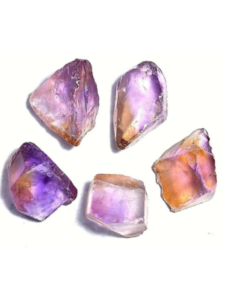
Where is bolivianite found?
Anahí Mine, Bolivia: Bolivianite is found primarily in the Anahí Mine, a remote location within the eastern region of Bolivia near the border with Brazil. This deposit is known for producing ametrine, which is a combination of amethyst and citrine forming naturally within quartz veins. The mine sits deep within the Pantanal wetlands, where geological conditions created an ideal environment for crystal growth. The area’s mineral-rich composition allows distinct zones of purple and yellow coloration to form through slow cooling processes over millions of years.
Southeastern Santa Cruz Department: Within the Santa Cruz Department of Bolivia lies the main concentration of Bolivianite, where the climate and terrain create a unique mineralogical setting. This region has long been recognized for its quartz-bearing pegmatites that contain both amethyst and citrine in unified structures. Mining operations here focus on careful extraction due to the delicate banding within the crystals. Local communities have developed a lasting connection with these deposits, maintaining traditions of gem cutting and exporting through controlled mining practices.
Additional Locations: While Bolivia remains the most significant source, smaller deposits resembling Bolivianite have been noted in neighboring areas of Brazil and parts of South America with similar geological backgrounds. These occurrences often produce crystals with less distinct color zoning but share comparable chemical structure and formation conditions. Research continues across these regions to understand the variations in coloration and crystal growth between different sites, contributing to broader knowledge of how dual-toned quartz develops naturally in the continent’s mineral belts.
Is bolivianite rare?
Bolivianite is considered a rare gemstone due to its unique geological formation that combines both amethyst and citrine within a single crystal. This natural fusion occurs only under specific temperature and pressure conditions found primarily in one region of Bolivia. The limited number of deposits capable of producing this dual coloration makes its availability uncommon in the global gem market.
While other locations have quartz varieties that resemble its appearance, genuine Bolivianite remains distinct in structure and composition. Its rarity also comes from the precision required during mining to preserve the natural color transition without fracturing the crystal. The controlled export and high demand for authentic specimens contribute further to its reputation as an uncommon mineral. Each mined piece displays individual variations in saturation and zoning, making every sample different in tone and quality while retaining the signature combination that defines its origin and mineral identity.
Bolivianite price
Bolivianite prices vary according to clarity, size, and the definition between the amethyst and citrine zones within each crystal. Smaller faceted stones showing moderate color balance usually range from $10–$30 per carat, representing accessible quality with visible zoning.
Mid-grade gemstones that display stronger contrast and higher transparency often sell for $40–$80 per carat, reflecting improved depth and overall polish. High-end cuts featuring sharp color transitions and flawless clarity can reach $100–$150 per carat, particularly when sourced from verified Bolivian deposits. Larger collector-grade crystals, especially those kept in natural form with complete color zoning, are typically valued between $200–$500 per specimen, depending on overall presentation.
Exceptional museum-quality pieces exceeding several inches in size and showing precise separation of tones may command prices of $600–$1,000 or more, representing the rarest quality available within the limited production from Bolivian mines.
Bolivianite properties
| Property | Description |
|---|---|
| Mineral type | Quartz variety that shows both amethyst and citrine zoning in the same crystal, often described as ametrine |
| Chemical formula | SiO₂ (silicon dioxide) |
| Crystal system | Trigonal |
| Color | Purple zones similar to amethyst with yellow to golden zones similar to citrine, often sharply divided or blended in bands |
| Transparency | Transparent to translucent |
| Luster | Vitreous with a glass-like surface reflection when polished |
| Hardness (Mohs) | 7 |
| Fracture | Conchoidal to uneven |
| Cleavage | No true cleavage, cleavage is generally absent in quartz |
| Streak | White |
| Specific gravity | About 2.6–2.7 |
| Refractive index | About 1.544–1.553 |
| Transparency features | May show internal zoning lines and growth patterns that reveal where temperature and pressure shifted during formation |
| Common forms | Cut gemstones, natural crystal sections, polished freeforms, and specimens on matrix from Bolivian localities |
| Notable locality | Anahí Mine, Santa Cruz Department, Bolivia |
Bolivianite vs ametrine
Bolivianite and ametrine share nearly identical composition, both being varieties of quartz that combine amethyst and citrine within the same crystal structure. The primary distinction lies in naming and origin, as Bolivianite specifically refers to ametrine sourced from Bolivia’s Anahí Mine, where the natural blending of purple and golden tones forms under rare geological conditions. Ametrine is the broader term used internationally for this dual-colored quartz, regardless of locality. While both display similar hardness, luster, and transparency, Bolivianite carries cultural and regional significance tied to its Bolivian source, making it a recognized gemstone of national and mineralogical importance.

