Anorthosite often catches attention because it connects Earth and the Moon in a surprising way, showing up in massive ancient formations and across the lunar highlands. This igneous rock may feel simple at first glance, yet its story ties together magma, deep crustal processes, and early planetary history. From Greenland outcrops to Apollo samples, anorthosite may offer a quiet look into how plagioclase rich rocks formed, settled, and became a dominant part of planetary crusts over time. In today’s guide, let’s explore it in detail, seeing what it’s all about.
Anorthosite meaning
Grounding: Anorthosite may carry a grounding presence that feels quiet, often linked to moments when life feels mentally crowded or overly loud. Its energy may feel supportive during times when you want your thoughts to slow without forcing anything to change.
Mental clarity: This stone may be associated with clear thinking and simple focus, especially when distractions feel constant, and it may support a sense of order in your thoughts where ideas feel less scattered and easier to sit with throughout the day.
Emotional balance: It may also relate to emotional balance by offering a feeling of neutrality, where emotions feel acknowledged without being pushed aside, which allows space for reactions to soften naturally and settle into something more manageable.
Inner strength: Lastly, it may also be linked to a quiet inner strength that feels firm rather than forceful, often connected to confidence that develops over time. This supports the idea of staying present and consistent even when external situations feel uncertain.
Where is Anorthosite found?
Canada: Canada holds some of the most well known anorthosite bodies in the world, especially within the Grenville Province of Quebec and Labrador, where large anorthosite massifs formed deep in the crust and are studied for both geological scale and purity.
Norway: Norway is also known for classic anorthosite complexes, particularly in the southwestern region, where these rocks appear in massive formations and are often referenced in mineralogical studies due to their size and clear feldspar composition.
United States: The United States contains notable anorthosite occurrences in states such as New York and Minnesota, where ancient igneous activity created large deposits that are visible today and commonly discussed in relation to North American geology.
Greenland: Greenland hosts extensive anorthosite terrains tied to very old crustal rocks, and these locations are frequently mentioned in research focused on early Earth processes and large scale igneous formations.
Madagascar: Lastly, Madagascar has reported anorthosite occurrences within its complex geological landscape, often associated with high grade metamorphic regions and discussed alongside other feldspar rich rock types.
What is Anorthosite?
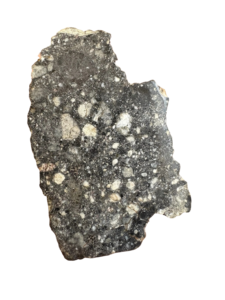
Anorthosite is an igneous rock type made almost entirely of plagioclase feldspar, formed when magma cools slowly beneath the surface as a plutonic and intrusive igneous rock. This mineral rich rock is considered anorthositic due to its chemical composition being dominated by plagioclase crystals rather than mafic minerals, even though it may contain small amounts of pyroxene, olivine, clinopyroxene, amphibole, magnetite, or ilmenite. Many anorthosites formed during the Proterozoic and are linked to large scale magmatic intrusion within the crustal environment.
This igneous rock is closely tied to lunar geology, as anorthosite is the dominant rock of the lunar highland, collected during Apollo missions and studied for its role in early lunar crust formation. Lunar anorthosite is thought to have crystallized from a magma ocean, where plagioclase floated upward as a cumulate while denser materials sank toward the mantle. On Earth, anorthosite bodies are found in places like Greenland and the Bushveld Complex, often associated with labradorite rich varieties.
From a geological and petrology perspective, anorthosite provides insight into magmatic processes, geochemistry, and how large igneous systems evolve alongside basaltic and mantle derived materials.
Anorthosite price
Anorthosite pieces can vary widely in price based on size and quality, with small tumbled stones often found around $5 to $15 and medium sized polished pieces frequently listed between $20 and $50. Larger slabs or display specimens, on the other hand, can range from $60 to $150 depending on weight and finish. Very large sections that show interesting patterns can reach prices near $200 or more. Mostly, pricing is driven by how the piece looks and how it has been prepared rather than any standard set number.
Anorthosite properties
| Property | What you may notice |
|---|---|
| Material type | Igneous rock made mostly of plagioclase feldspar |
| Primary composition | Plagioclase feldspar, often with small amounts of pyroxene, olivine, or amphibole |
| Color | White to light gray, sometimes bluish gray, sometimes darker when mixed minerals are present |
| Pattern | Speckled or mottled look from grain boundaries and mixed minerals |
| Grain size | Fine to coarse, many pieces are medium to coarse grained |
| Texture | Granular and crystalline, often looks like tightly packed feldspar grains |
| Luster | Vitreous to pearly on fresh faces, more dull on weathered surfaces |
| Streak | White |
| Transparency | Opaque overall, thin edges of individual grains may be slightly translucent |
| Hardness | About 6 to 6.5 on the Mohs scale |
| Specific gravity | Often around 2.6 to 2.8 |
| Cleavage | Two good directions from feldspar, commonly near right angles |
| Fracture | Uneven to splintery between cleavage faces |
| Toughness | Moderate, edges can chip when struck |
| Magnetism | Not magnetic in most pieces |
| Reaction to acid | No obvious fizz with common weak acids |
| Weathering | Surface can turn chalky or dull compared with a fresh cut face |

